
How to Stop Overthinking and Quiet a Mind That Won't Switch Off
Feeling Overwhelmed, Anxious
or Stuck in the Past?
If your mind keeps replaying conversations, second-guessing decisions, imagining what might happen or searching for answers you can't quite find, the problem may not simply be that you “think too much.”
Overthinking can become a repetitive mental process that keeps pulling you back into analysis, prediction and mental replay.
Thinking itself is useful. It helps us solve problems, make decisions and prepare for what comes next. But thinking becomes less helpful when it repeatedly returns to the same question without producing greater clarity or useful action.
You might replay a conversation long after it has finished. You might revisit a decision you have already made. You might run through every possible outcome of something that hasn't happened yet. At night, your body may feel exhausted while your mind continues analysing, predicting and trying to resolve things.
Research often studies related processes under terms such as worry, rumination and repetitive negative thinking, rather than treating “overthinking” as a single clinical condition.
Instead of asking,
“How do I stop thinking?”
try asking:
“What's keeping the thinking going?”
No Risk
100% Free 7 Day Trial
No Credit Card Required
No Commitment Necessary
What Is Overthinking?
Overthinking is an everyday term rather than a specific clinical diagnosis.
It commonly describes thinking that has become repetitive, difficult to disengage from and increasingly unproductive. In psychological research, related processes are often studied as worry, rumination or the broader concept of repetitive negative thinking.
Overthinking can look like:
replaying conversations to work out what you should have said;
repeatedly questioning a decision you have already made;
imagining different ways a future situation could go wrong;
analysing what another person might be thinking about you;
revisiting a problem without reaching a useful conclusion;
lying awake trying to resolve something that does not need to be resolved that night; or
becoming preoccupied with the fact that you cannot stop thinking.
The important distinction is not simply how much you think. It is what the thinking is doing.
Useful Thinking vs Repetitive Thinking
Useful Thinking
Moves towards something:
understanding;
a decision;
useful information;
an action; or
acceptance that nothing more can be done yet.
Repetitive Thinking
Keeps returning to:
the same uncertainty;
the same conversation;
the same prediction;
the same decision;
the same imagined outcome.
Ask yourself:
Is this thinking helping me understand or act
or
Am I going over the same ground again?
Why Can't I Stop Overthinking?
Overthinking can feel as though your mind is working against you. But repetitive thinking may be trying to achieve something: find an answer, reduce uncertainty, anticipate a problem, prevent a mistake or make sense of something that feels unresolved.
The difficulty is that not every problem has an immediate answer.
You cannot know exactly what another person thinks. You cannot predict every possible outcome. You cannot guarantee that a decision will work perfectly. And you cannot remove all uncertainty from the future.
When the mind continues trying to achieve certainty about something that is inherently uncertain, thinking can continue without reaching the resolution it is searching for.
Your Mind May Be Trying to Find Certainty
Research has found a substantial relationship between intolerance of uncertainty and worry.
This does not mean uncertainty is the sole cause of overthinking. But it helps explain something many people recognise:
“If I can just think about this a little longer, maybe I'll finally know.”
Sometimes you will.
But sometimes there simply isn't enough information available yet.
The attempt to eliminate uncertainty can then become part of what keeps the thinking going.
Thinking More Can Create More Questions
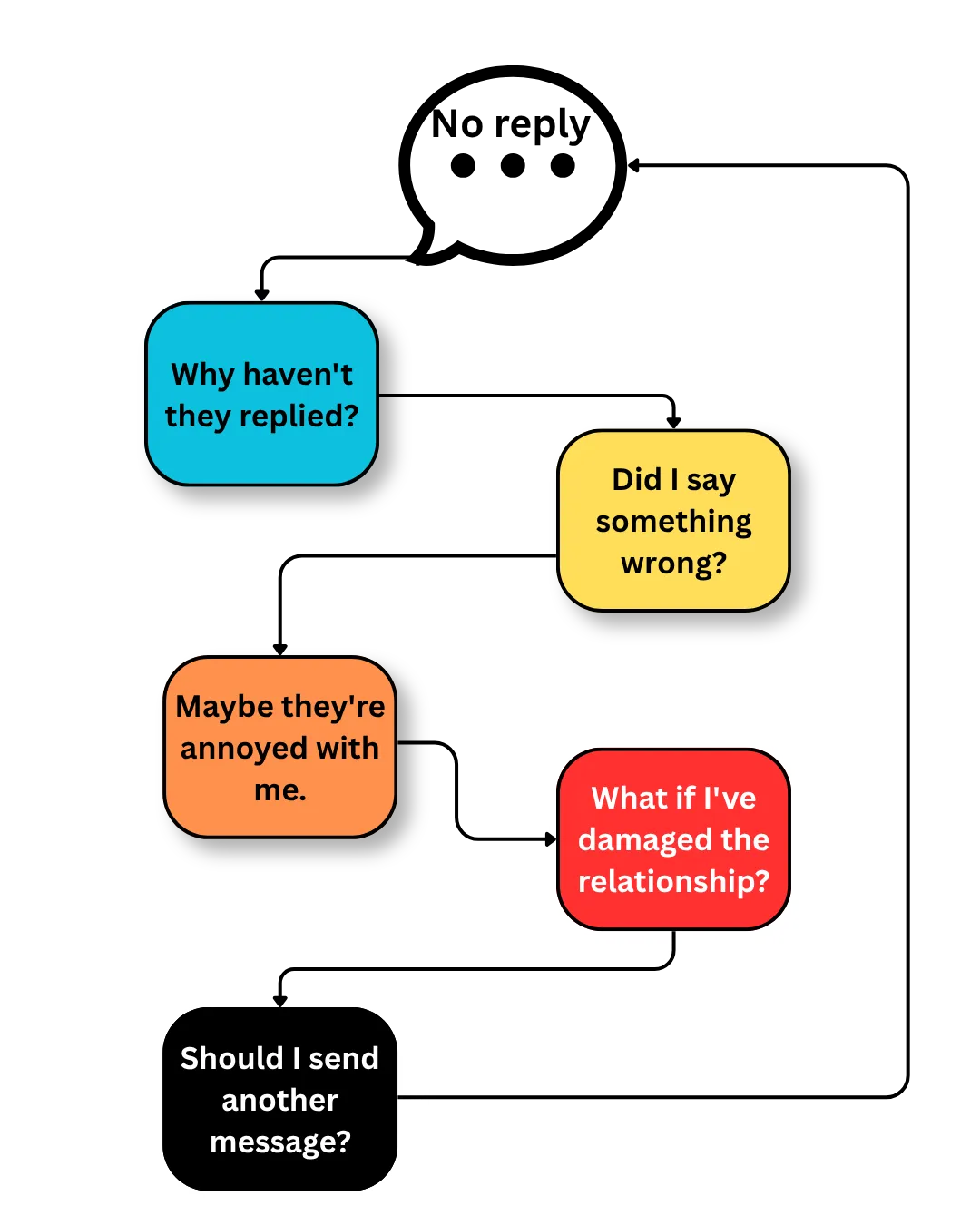
The original situation hasn't changed. What has changed is the amount of mental material surrounding it.
Repetition Can Make Overthinking Feel Automatic
When the mind repeatedly approaches uncertainty, stress or unresolved situations through analysis, replay and prediction, that way of thinking can begin to feel increasingly familiar.
Eventually, you may notice yourself only after you are already caught in the process.
That is why overthinking can begin to feel like:
“That's just how my brain works.”
Recognising it as a recurring process gives you something more useful to work with than simply labelling yourself “an overthinker.”
Why Overthinking Can Become a Recurring Pattern
One useful way of understanding overthinking is to look at the recurring processes that may help keep repetitive thinking going. Within Rob Edmonds' pattern-based framework, several tendencies can contribute to this experience.
Getting Stuck Inside Your Thoughts

Rob describes this as internal orientation.
Your attention repeatedly turns towards thoughts, interpretations, imagined outcomes, replays and predictions.
Reflection is useful. The difficulty arises when attention repeatedly returns to internal analysis even when there is nothing useful to resolve.
Difficulty Allowing Uncertainty

Some questions genuinely don't have an immediate answer.
If uncertainty feels difficult to tolerate, the mind may respond by trying to eliminate it through more thinking.
But more thinking cannot always create more certainty.
Sometimes the useful answer is: “I don't know yet—and I don't need to know right now.”
One Issue Becomes a Much Bigger Story
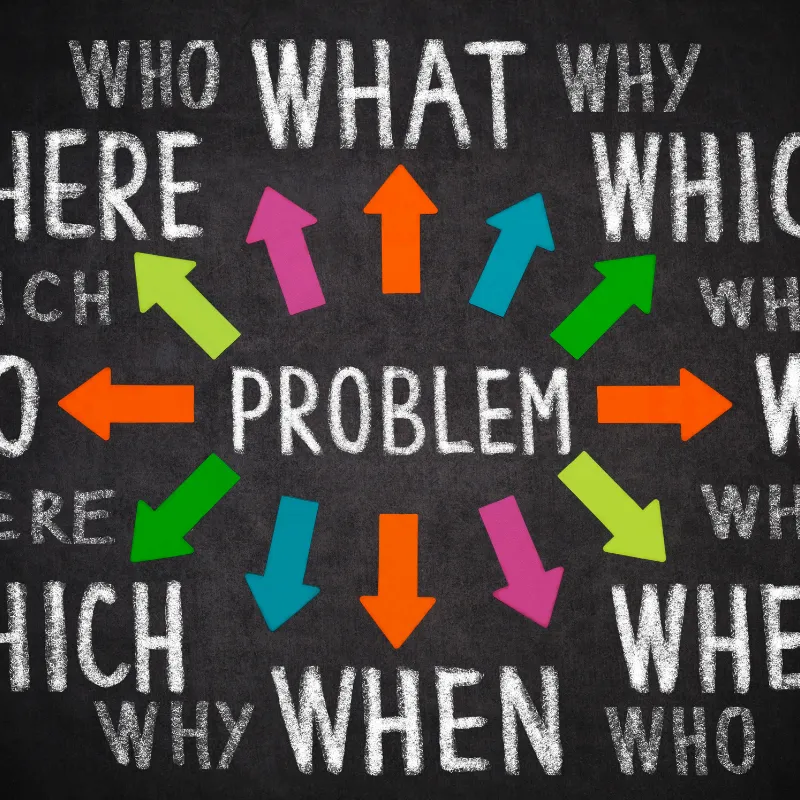
Rob describes this as global thinking.
A difficult conversation becomes:
“This relationship isn't working.”
A mistake becomes:
“I always get things wrong.”
A stressful day becomes:
“I can't cope with anything.”
Bringing the issue back to what actually happened can reduce the amount of additional story surrounding it.
When Everything Blends Together

Work problems follow you into the evening.
Relationship concerns enter work.
Yesterday's conversation becomes part of today's situation.
Tomorrow's problem arrives mentally before tomorrow does.
Instead of one issue requiring attention, several become connected.
When Your Mind & Body Stay Switched On

Overthinking can also occur when you already feel alert, stressed or mentally activated.
Research on perseverative cognition, including worry and rumination, suggests repetitive thinking can extend aspects of stress-related activation beyond the event that originally triggered it.
The meeting may be finished.
The argument may be over.
Tomorrow hasn't happened.
But mentally, the situation continues.
Why Does My Brain Keep Thinking at Night?
Your body may be tired while your mind starts reviewing the day:
Did I handle that properly?
What do I need to do tomorrow?
Why did they say that?
What if this doesn't work out?
Without the activity and external demands of the day, internal thinking can become particularly noticeable.
Research has examined relationships between repetitive negative thinking, worry and insomnia. This does not mean overthinking is the sole cause of sleep problems, but repetitive thinking is relevant to scientific models of sleep difficulty.
Why Trying to Force Your Mind to Switch Off May Not Help
Research into deliberate thought suppression has found rebound effects in which deliberately suppressed thoughts can become more accessible afterwards.
So there is an important difference between redirecting your attention and continually checking whether you have successfully forced a thought out of your mind.
Instead of “I have to stop thinking”,
try
“I don't need to solve this right now.”
How to Stop Overthinking:
7 Practical Strategies
There probably isn't one technique that instantly stops every episode of overthinking. But there are practical ways to recognise when thinking has become repetitive and change what happens next.
Step 1
Recognise When Thinking Has Become a Loop

Ask:
Have I learned anything new from the last few minutes of thinking about this?
If you're repeatedly revisiting the same questions, predictions or interpretations, recognise what is happening:
“I'm going over the same thing again.”
You don't have to solve it immediately. First recognise the repetition.
Step 2
Ask: "Is This Useful Right Now?"

Ask yourself:
Can I make a decision?
Can I take an action?
Is there information I genuinely need?
If yes, identify the next useful step.
If not, continued analysis may simply be adding more thinking rather than more clarity.
Step 3: Separate What Is Happening From What You Are Imagining.

FACT
They haven't replied to my message.
INTERPRETATION
They're upset with me.
PREDICTION
This will damage our relationship.
Only the first statement is currently known.
Possibilities are not automatically facts.
Step 4: Bring Your Attention Back To What Is Happening Now

Notice what you're doing.
Look at your surroundings.
Engage with the task in front of you.
Walk, make something, speak to someone or return attention to something actually happening.
This isn't about pretending the issue doesn't exist. It is recognising that your attention doesn't have to remain inside a thought simply because the thought is present.
Step 5
Narrow The Problem!

Instead of:
“Everything is going wrong.”
ask:
“What specifically is happening right now?”
Instead of:
“I always do this.”
ask:
“What happened in this particular situation?”
Instead of:
“What if the whole thing fails?”
ask:
“What is the next decision I actually need to make?”
Step 6
Focus On What You Can Actually Influence

You cannot completely control:
what someone else thinks;
another person's response;
every future outcome;
whether everything goes according to plan.
You can often influence:
what you do next;
what information you obtain;
where you place your attention;
what you communicate;
the decision you make with the information currently available.
What part of this is actually mine to do something about?
Step 7: Allow Some Questions To Remain Unanswered

Try:
“I don't know—and I don't need to know right now.”
Allowing uncertainty is not giving up.
Sometimes it simply means recognising that continued thinking cannot produce information you don't yet have.
Interrupting Overthinking
vs
Changing the Pattern
Rob Edmunds' MindShift Method retrains the pattern!
The strategies above can help you recognise and interrupt an overthinking loop. But there is an important distinction between interrupting a pattern when it appears and working to change the recurring cognitive pattern itself.
This distinction sits at the centre of the approach developed by Rob Edmonds.
Within Rob's framework, awareness and interruption help expose what the mind repeatedly does. But the intended objective of Cognitive Pattern Reprogramming™ is not simply to leave the old cognitive pattern intact and become increasingly skilled at consciously managing it whenever it appears.
The broader focus is on retraining the recurring cognitive pattern itself.
Instead of continually trying to manage the same overthinking pattern, can the recurring pattern itself be retrained?

A Pattern-Based Approach to Overthinking
Rob Edmonds developed Cognitive Pattern Reprogramming™ (CPR), the methodology underlying The MindShift Method™.
Within this framework, recurring difficulties are examined partly through the cognitive patterns associated with how situations are interpreted, processed and repeatedly experienced.
Applied to stress, anxiety and overthinking, the focus moves away from simply asking:
“How can I make this thought disappear?”
and towards questions such as:
Does uncertainty automatically trigger more analysis?
Does one event quickly become a much larger story?
Does attention repeatedly turn inward into replay and prediction?
Do unresolved issues follow you from one part of life into another?
Does your mind remain engaged when nothing currently requires action?
These questions shift attention from individual thoughts towards the recurring pattern associated with them.
From Recognising a Pattern to Retraining It
Step 1
Recognise the recurring pattern
Step 2
Identify how the pattern operates
Step 3
Work with and retrain the recurring pattern
Step 4
Support the development of a different cognitive pattern over time
The distinction matters.
The intended aim is not simply to practise a different conscious response every time the same old cognitive pattern runs.
Cognitive Pattern Reprogramming™ is designed to work with the recurring cognitive pattern itself, with the aim of helping different patterns of thinking, feeling and behaviour become more established over time.
Try This the Next Time You Catch Yourself Overthinking
✅ 1. NOTICE THE LOOP
What am I repeatedly thinking about?
✅ 2. GET SPECIFIC
What is actually happening right now?
✅ 3. SEPARATE FACT FROM PREDICTION
What do I know—and what am I assuming, imagining or predicting?
✅ 4. CHECK USEFULNESS
Is continuing to think about this helping me make a decision or take useful action?
✅ 5. IDENTIFY YOUR INFLUENCE
Is there something I can genuinely do?
If yes, identify the next action.
✅ 6. ALLOW UNCERTAINTY
Does this actually need an answer right now?
✅ 7. RETURN TO THE PRESENT
If there is nothing useful to do, deliberately return your attention to what is happening around you.
You are not trying to win an argument with your thoughts. You are recognising when continued thinking has stopped being useful.
When Should You Get Help for Overthinking?
Occasional overthinking is common.
But repetitive thinking can sometimes become persistent enough to interfere with sleep, concentration, relationships, work or everyday functioning.
It can also occur alongside anxiety, depression, insomnia and other mental-health difficulties.
Consider speaking with an appropriately qualified health professional if your thoughts feel difficult to manage, cause significant distress, repeatedly interfere with sleep or daily life, or are accompanied by other concerning symptoms.
If you are experiencing thoughts of self-harm or suicide, seek urgent professional or crisis support in your location.
MindShift knowledge content and guided personal-development sessions are not substitutes for appropriate medical or psychological care where this is required.

Frequently Asked Questions About Overthinking
How do I stop overthinking everything?
Start by distinguishing useful thinking from repetitive thinking. Notice when you are repeatedly analysing the same issue without gaining new information or identifying a useful action. Bring the problem back to what you actually know, what you can influence and what—if anything—needs to be done now. Some uncertainty may need to remain unresolved rather than being eliminated through more thinking.
Why do I overthink so much?
There may not be one reason. Repetitive thinking can involve worry, rumination, attempts to resolve uncertainty, repeated prediction and mental replay. Research shows a particularly strong relationship between intolerance of uncertainty and worry. Individual experiences vary.
Why can't I switch my brain off?
Your mind may remain engaged with unresolved questions, future possibilities, past events or things it believes still require attention. Rather than trying to forcibly switch off every thought, it may help to identify what your mind is repeatedly trying to resolve and whether it actually requires attention now.
Why is overthinking worse at night?
Night can remove many of the activities and external demands that occupy attention during the day, making internal thinking more noticeable. Worry and repetitive negative thinking are also relevant to research on sleep difficulties. Persistent insomnia should be discussed with an appropriate health professional.
Can trying to stop thinking make overthinking worse?
Sometimes. Research into deliberate thought suppression has found rebound effects in which suppressed thoughts can become more accessible afterwards. Recognising the thought without continuing to analyse it and redirecting attention may be more useful than repeatedly checking whether the thought has disappeared.
Is overthinking the same as anxiety?
No. Overthinking is an everyday term, not a diagnosis. Repetitive thinking can occur alongside anxiety, but experiencing worry, rumination or repeated analysis does not by itself establish an anxiety disorder.
Can overthinking become a pattern?
Repetitive ways of thinking can become familiar and may begin to occur automatically in particular situations. Research uses concepts such as repetitive negative thinking to examine recurring processes including worry and rumination. Within The MindShift Method™, overthinking is also examined through recurring cognitive patterns associated with processes such as uncertainty, prediction, internal focus and mental replay.
Can recurring patterns associated with overthinking be retrained?
Cognitive Pattern Reprogramming™ is Rob Edmonds' methodology for identifying and retraining recurring cognitive patterns. Within the MindShift framework, the intended aim is not simply to manage the same recurring pattern more effectively, but to work with the pattern itself so that different cognitive patterns can become established over time. Individual experiences vary, and this description should not be interpreted as a claim of clinically proven effectiveness.
Selected Research & Further Reading
Repetitive Negative Thinking
Research examining the shared features of worry, rumination and repetitive negative thinking.
Gustavson et al. (2018) — View Research
Intolerance of Uncertainty & Worry
Research examining the strong association between intolerance of uncertainty and worry.
Shihata et al. (2026) — View Research
Perseverative Cognition & Stress
Research examining associations between worry, rumination and continued stress-related physiological activation.
Ottaviani et al. (2016) — View Research
Thought Suppression
Research examining rebound effects that can occur when people deliberately try to suppress unwanted thoughts.
Wang et al. (2020) — View Research
Repetitive Thinking & Sleep
Research examining repetitive negative thinking, sleep-related worry and insomnia.
Ballesio et al. (2021) — View Research
Want to Work With the Patterns Behind Your Overthinking?
Understanding overthinking is useful.
Recognising when your mind has entered a repetitive loop is another step.
If you would like to explore a guided pattern-based approach, the Stress, Anxiety & Overthinking MindShift Pathway brings together MindShift Method™ sessions relevant to recurring patterns associated with overthinking, mental overload, anxious thinking, stress and difficulty switching off.
Rather than searching through hundreds of individual MindShift sessions, the pathway gives you a structured place to begin.
Want to understand the approach first?

Stay connected and informed. Subscribe to our newsletter for expert tips, mental wellness resources, and updates straight to your inbox. Join our community and start your journey to Cognitive Patter Reprogramming today!
Contact Us
© MindShift Studio 2026 All Rights Reserved.